Get this book

Amazon
Books & Kindle

Audible
Audiobook

Bookshop.org
Support indie stores
Affiliate links — I earn a small commission if you buy, at no extra cost to you. Learn more
Data via openlibrary
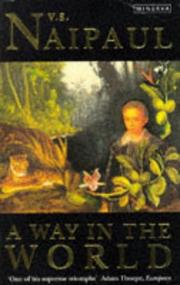
A Way in the World
No ratings yet
"Most of Us Know the parents or grandparents we come from. But we go back and back, forever: we go back all of us to the very beginning: in our blood and bone and brain we carry the memories of thousands of beings.". So observes the opening narrator of A Way in the World, and it is this conundrum - that the bulk of our inheritance must remain beyond our grasp - which suffuses this extraordinary work of fiction, the first in seven years by one of the most acclaimed writers of our time. Returning to the autobiographical mode he so brilliantly explored in The Enigma of Arrival, and writing here in the classic form of linked narrations, Naipaul constructs a story of remarkable resonance and power, remembrance and invention. It is the story of a writer's lifelong journey towards an understanding of both the simple stuff of inheritance - language, character, family history - and the long interwoven strands of a deeply complicated historical past: "things barely remembered, things released only by the act of writing." What he writes - and what his release of memory enables us to see - is a series of extended, illuminated moments in the history of Spanish and British imperialism in the Caribbean: Raleigh's final, shameful expedition to the New World; Francisco Miranda's disastrous invasion of South America in the eighteenth century; the more subtle aggressions of the mid-twentieth-century English writer Foster Morris; the transforming and distorting peregrinations of Blair, the black Trinidadian revolutionary.
Get this book
Amazon
Books & Kindle
Audible
Audiobook
Bookshop.org
Support indie stores
Affiliate links — I earn a small commission if you buy, at no extra cost to you. Learn more