Get this book

Amazon
Books & Kindle

Audible
Audiobook

Bookshop.org
Support indie stores
Affiliate links — I earn a small commission if you buy, at no extra cost to you. Learn more
Data via openlibrary
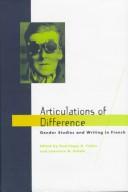
Articulations of difference
No ratings yet
This collection of fifteen essays deals with the representations, theories, and problematics of homosexuality in French writing of the nineteenth and twentieth centuries. Though focusing on literature, it also includes other self-conscious writing, such as medical discourse and lexicography. The authors examine how homosexuality is a component in the representation of ideology, desire, and structures in the nineteenth century, and how, in the twentieth century, homosexuality emerges in its own right as a subject for representation and study. Drawn from insights of the past twenty years, the essays reflect the renewed approach of gender and sexuality as they relate to homosexuality and its representation, and they rely on models that differentiate between sexuality and gender and between natural inclinations and social constructs. Despite the wide variety of subjects, critical positions, and authors' backgrounds, what these essays have in common is the willingness of the contributors to go beyond a set of rhetorics, a set of limitations that were a defining moment in the struggle of gay liberation, and its reflection in both creative and critical writing. The essays are the product of a new stage in the development of gender studies: a look at all the genders, a recognition of a completely destabilized system of genders and sexes, a privileging of the slippages, ambiguities, and tropings among these positions. The essays range from studies of traditional narrative and poetry to readings of medical records, from examinations of twentieth-century narratives of gay liberation to readings of gender in the post-colonial world. For that reason, the editors have given the collection the title Articulations of Difference, for in that title, beyond gender and genre, is the idea of new production, new worlds, and new ideas.
Get this book
Amazon
Books & Kindle
Audible
Audiobook
Bookshop.org
Support indie stores
Affiliate links — I earn a small commission if you buy, at no extra cost to you. Learn more