Get this book

Amazon
Books & Kindle

Audible
Audiobook

Bookshop.org
Support indie stores
Affiliate links — I earn a small commission if you buy, at no extra cost to you. Learn more
Data via openlibrary
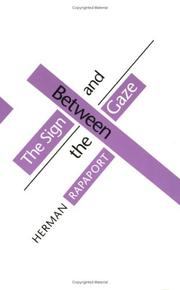
Between the sign & the gaze
No ratings yet
A woman turns into a piece of furniture (Theodor Fontane's Effi Briest); a writer of children's books takes photos of naked little girls (Lewis Carroll); Mont Blanc becomes the maternal breast (Shelley); Hamlet mistakes Ophelia for a phallus (Lacan's Hamlet seminar); and mom turns out to have thermonuclear arms (Laurie Anderson's United States). Reviewing the ways in which women have been fantasized across nineteenth- and twentieth-century Western culture, Herman Rapaport offers a series of brilliant insights into the concept of the fantasm in modern art. This gathering of new and previously published essays centers on a key question in psychoanalytic theory - the primacy of visual (iconic) versus linguistic (auditory) realms in the construction of fantasy. Rapaport first provides a lucid analysis of the historical development of the French psychoanalytic concept of the fantasm - which includes such phenomena as dramas and daydreams, delusions, hallucinations, primal scenes, imaginary objects, fantasies, and complexes. In the chapters that follow, Rapaport considers both visual and linguistic aspects of the fantasm in penetrating interpretations of many well-known works, ranging from poetry to performance art. Engaging such controversies as the conflict between Lacanian and Derridean viewpoints, this book will be essential reading for anyone interested in literary theory, feminist theory, and the intersections of psychoanalysis and philosophy in literary criticism.
Get this book
Amazon
Books & Kindle
Audible
Audiobook
Bookshop.org
Support indie stores
Affiliate links — I earn a small commission if you buy, at no extra cost to you. Learn more