Get this book

Amazon
Books & Kindle

Audible
Audiobook

Bookshop.org
Support indie stores
Affiliate links — I earn a small commission if you buy, at no extra cost to you. Learn more
Data via openlibrary
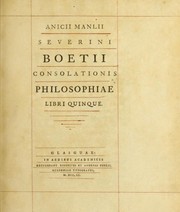
De consolatione philosophiae
No ratings yet
Boethius composed the De Consolatione Philosophiae in the sixth century A.D. whilst awaiting death under torture. He had been condemned on a charge of treason which he protested was manifestly unjust. Though a convinced Christian, in detailing the true end of life which is the soul's knowledge of God, he consoled himself not with Christian precepts but with the tenets of Greek philosophy. This work dominated the intellectual world of the Middle Ages; writers as diverse as Thomas Aquinas, Jean de Meun, and Dante were inspired by it. In England it was rendered into Old English by Alfred the Great, into Middle English by Geoffrey Chaucer, and later Queen Elizabeth I made her own translation. The circumstances of composition, the heroic demeanour of the author, and the 'Menippean' texture of part prose, part verse (Boethius was a considerable poet) have combined to exercise a fascination over students of philosophy and literature ever since. The book should therefore prove to be of value to students and scholars of classics, philosophy, and religion as well as to more general readers.
Get this book
Amazon
Books & Kindle
Audible
Audiobook
Bookshop.org
Support indie stores
Affiliate links — I earn a small commission if you buy, at no extra cost to you. Learn more