Get this book

Amazon
Books & Kindle

Audible
Audiobook

Bookshop.org
Support indie stores
Affiliate links — I earn a small commission if you buy, at no extra cost to you. Learn more
Data via openlibrary
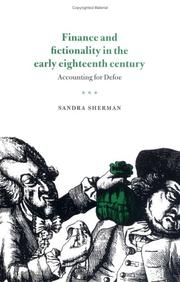
Finance and fictionality in the early eighteenth century
No ratings yet
In the early eighteenth century, the increasing dependence of society on financial credit provoked widespread anxiety. The texts of credit - stock certificates, IOUs, bills of exchange - were denominated as potential "fictions," while the potential fictionality of other texts was measured in terms of the "credit" they deserved. Sandra Sherman argues that in this environment finance is like fiction, employing the same tropes. She goes on to show how the work of Daniel Defoe epitomized the market's capacity to unsettle discourse, demanding and evading "honesty" at the same time. Defoe's oeuvre, straddling both finance and literature, theorizes the unsettlement of market discourse, elaborating strategies by which an author can remain in the market, perpetrating fiction while avoiding responsibility for doing so.
Get this book
Amazon
Books & Kindle
Audible
Audiobook
Bookshop.org
Support indie stores
Affiliate links — I earn a small commission if you buy, at no extra cost to you. Learn more