Get this book

Amazon
Books & Kindle

Audible
Audiobook

Bookshop.org
Support indie stores
Affiliate links — I earn a small commission if you buy, at no extra cost to you. Learn more
Data via openlibrary
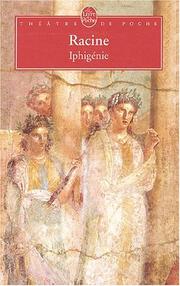
Iphigénie
No ratings yet
Créée à Versailles le 18 août 1674, Iphigénie marque le retour de Racine à des thèmes mythologiques après une série de sujets historiques (Britannicus, Bérénice, Bajazet, Mithridate). Sur les rivages d'Aulis, les Grecs se préparent à aller attaquer Troie. Mais ils ne peuvent atteindre Troie, car les dieux retiennent les vents nécessaires au départ de l'expédition. Agamemnon, leur chef, est donc contraint de consulter lʹoracle Calchas, qui lui ordonne de sacrifier sa fille, Iphigénie, afin dʹapaiser la déesse Artémis. Dans le chaos provoqué par les indécisions dʹAgamemnon, Iphigénie se soumet aux volontés de son père. Ambition dʹAgamemnon, désir de gloire dʹAchille, orgueil de Clytemnestre, jalousie dʹÉriphile : la pièce donne à voir des passions déchaînées qui, toutes, font dʹIphigénie leur victime. -- from http://fr.wikipedia.org (June 17, 2014). Iphigenie is a dramatic tragedy in five acts written in alexandrine verse by the French playwright Jean Racine. It was first performed in the Orangerie in Versailles on August 18, 1674 as part of the fifth of the royal Divertissements de Versailles of Louis XIV to celebrate the conquest of Franche-Comté. Later in December it was triumphantly revived at the Hotel de Bourgogne, home of the royal troupe of actors in Paris. With Iphigénie, Racine returned once again to a mythological subject, following a series of historical plays (Britannicus, Bérénice, Bajazet, Mithridate). On the shores at Aulis, the Greeks prepare their departure for an attack on Troy. The gods quell the winds for their journey and demand the sacrifice of Iphigénie, daughter of Agamemnon, King of the Greeks. -- from http://en.wikipedia.org (June 17, 2014).
Get this book
Amazon
Books & Kindle
Audible
Audiobook
Bookshop.org
Support indie stores
Affiliate links — I earn a small commission if you buy, at no extra cost to you. Learn more