Get this book

Amazon
Books & Kindle

Audible
Audiobook

Bookshop.org
Support indie stores
Affiliate links — I earn a small commission if you buy, at no extra cost to you. Learn more
Data via openlibrary
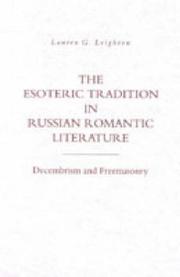
The esoteric tradition in Russian romantic literature
No ratings yet
The European esoteric tradition was introduced into Russia in the eighteenth century by Freemasons and continued in Russian romantic literature of the early nineteenth century. This study, which conjoins historiographical methods developed by modern scholars of esoterica and formalist methods of textual analysis, reveals the role of that tradition in Russian romantic literature. It deals extensively with Decembrism, the political conspiracy so known after its culmination in a failed attempt to overthrow the tsarist autocracy in December 1825. The Decembrist writers and other romantics influenced by Freemasonry, including Kondraty Ryleyev, Alexander Bestuzhev-Marlinsky, and Alexander Pushkin, were adept in the application of thaumaturgical skills to literature. Thaumaturgy denotes the application of arcane skills, some derived from the Cabala, to both the interpretation and creation of encoded literary texts. The Esoteric Tradition in Russian Romantic Literature also deals with the relationships between Russia's national poet and those writers who made the first major attempt at a Russian revolution. Viewing these relationships through the prism of occult imagery used in various literary works, Leighton tells an engaging story of political intrigue and communication by secret codes.
Get this book
Amazon
Books & Kindle
Audible
Audiobook
Bookshop.org
Support indie stores
Affiliate links — I earn a small commission if you buy, at no extra cost to you. Learn more